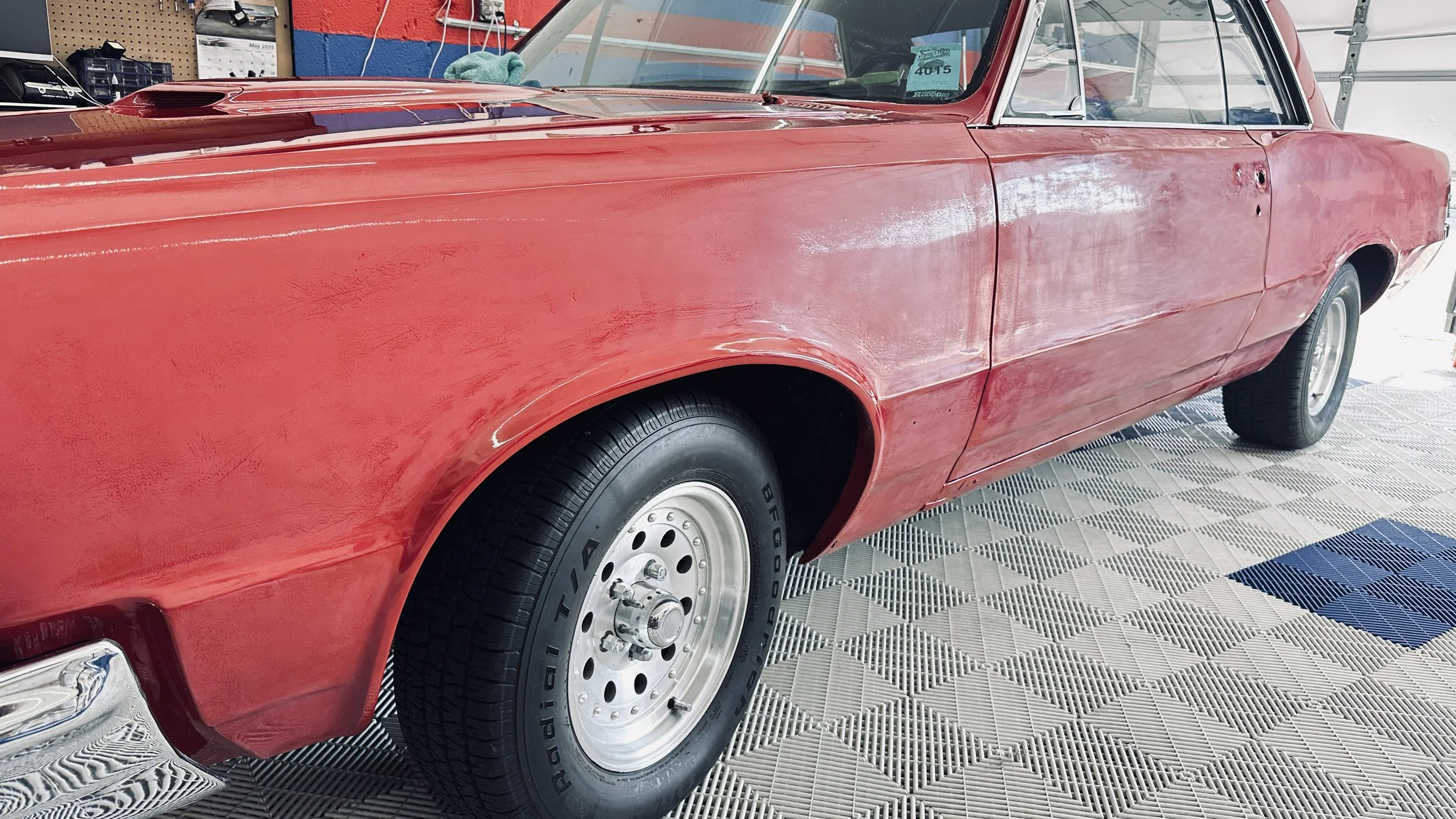
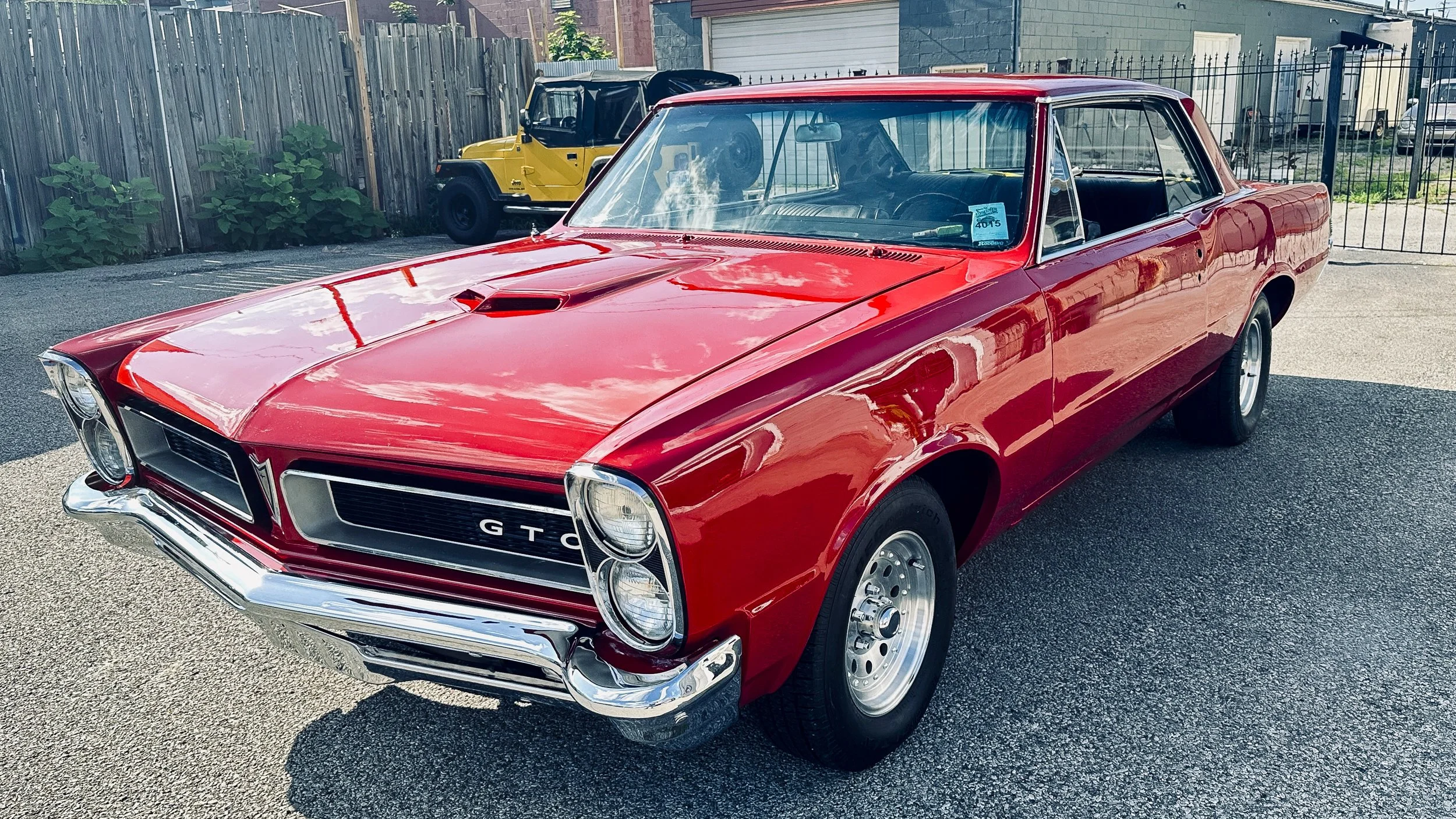
Professional Paint Correction in Louisville, KY
Permanent Clear Coat Leveling, Swirl Removal & Gloss Restoration
Restore your vehicle's factory shine—or make it better than the day it left the showroom. At Luxdream Car Detailing, we specialize in multi-stage paint correction that permanently eliminates swirl marks, scratches, holograms, and etching. Located at 619 E Broadway, we provide precision paint restoration for vehicle owners across Downtown Louisville, NuLu, the Highlands, and Germantown.
CALL: 502.702.3830 OR TEXT: 502.702.3830
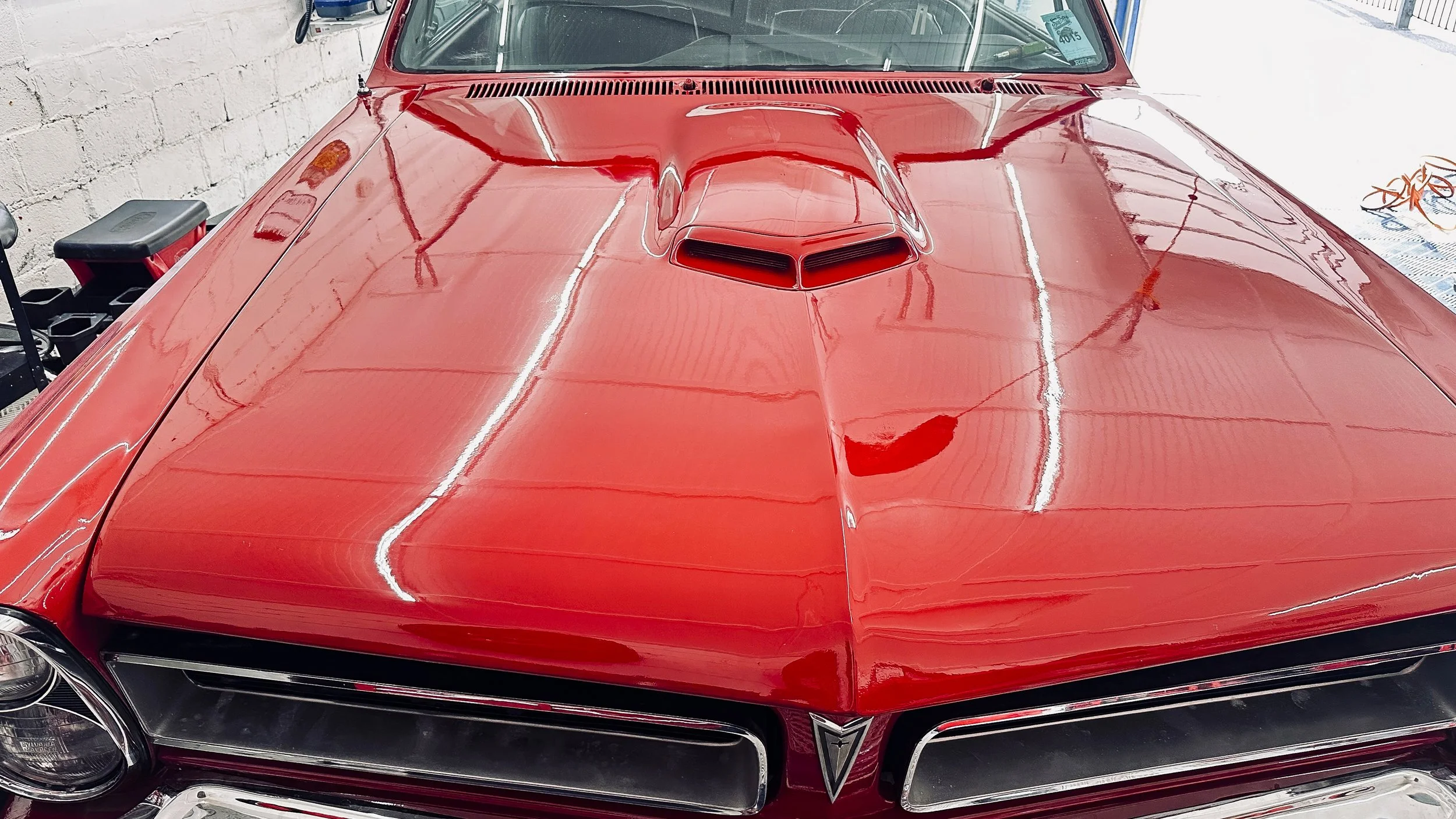
Mechanical Leveling vs. Buff & Wax
Why "Buff and Wax" Fails
Standard drive-through washes and quick glaze/wax applications rely on temporary silicones and fillers. These fillers wash out after a few rainstorms, exposing the original swirl marks and scratches underneath.
The Science of True Surface Leveling
True paint correction involves the mechanical leveling of the clear coat. Precision rotary and dual-action machinery paired with calibrated micro-abrasives remove a microscopic fraction of the damaged clear coat.
Micro-Scratch Scattering: Micro-scratches break up incoming light, causing paint to appear dull, hazy, or gray.
Specular Reflection: By leveling the surface flat, incoming light bounces directly back to your eyes, producing deep "wet-look" gloss and mirror-like depth.
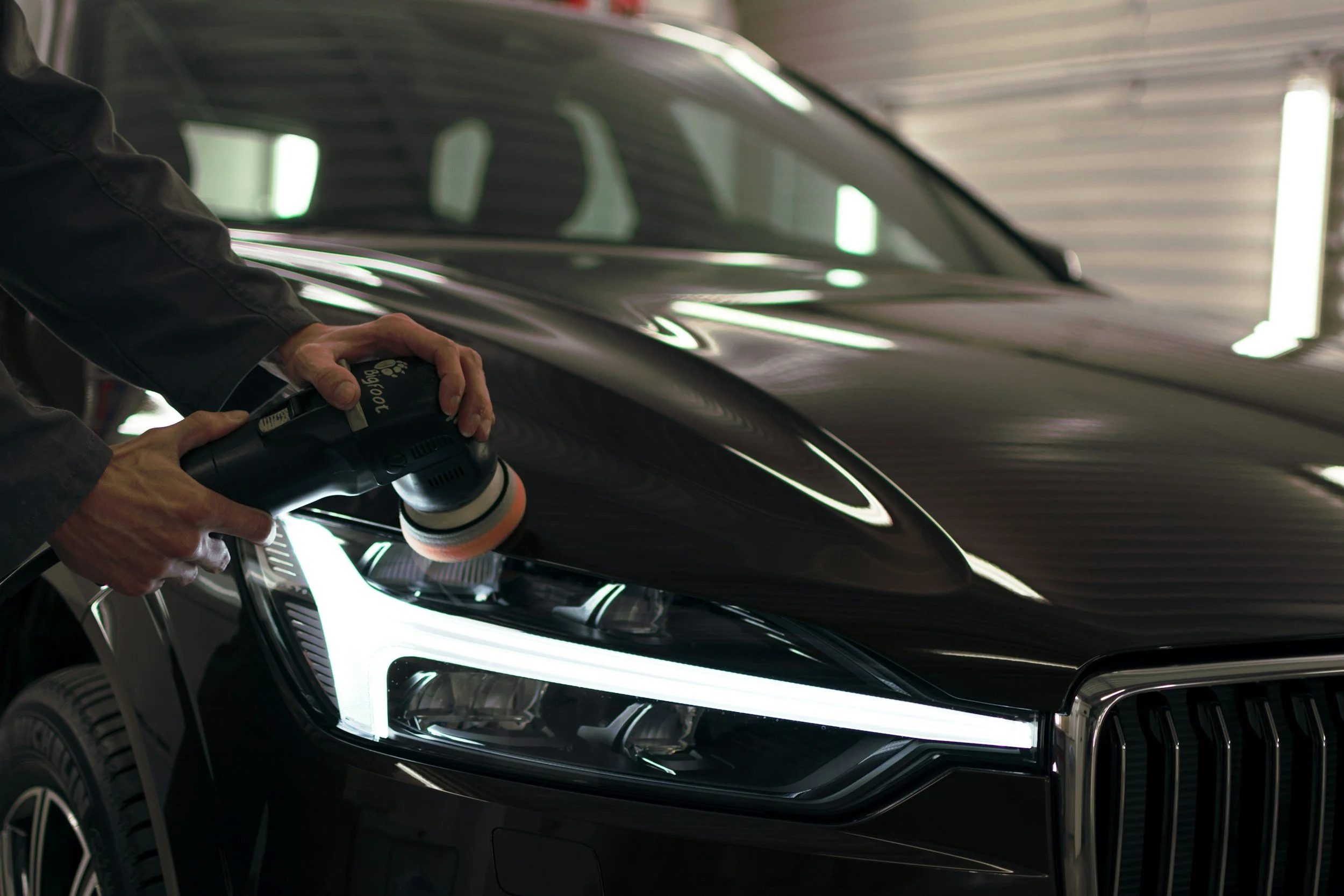
Paint Defects We Correct
Professional paint correction requires more than simply polishing the paint. Different defects require different techniques and levels of correction. We carefully inspect the paint before selecting the safest and most effective method.
Swirl Marks
Common Causes: Automated car washes, dirty wash mitts, improper washing and drying.
Correction Technique: Machine polishing with a finishing polish or multi-stage paint correction.
Fine Surface Scratches
Common Causes: Improper washing, vegetation contact, fingernail marks around door handles and light surface abrasion.
Correction Technique: Targeted machine polishing and multi-stage correction.
Moderate Scratches
Common Causes: Deeper washing scratches, brushes, branches, abrasion and repeated improper washing.
Correction Technique: Compounding followed by machine polishing. The depth of the scratch is evaluated before correction.
Deep Scratches
Common Causes: Key scratches, heavy abrasion, accidents or contact with hard objects.
Correction Technique: Paint-depth evaluation followed by controlled wet sanding and polishing when appropriate. Scratches that penetrate through the clear coat may require touch-up or professional repainting.
Buffer Trails / Holograms
Common Causes: Improper rotary polishing, aggressive compounds or inexperienced machine polishing.
Correction Technique: Precision dual-action polishing and finishing to refine the paint and eliminate visible holograms.
Paint Marring
Common Causes: Towels, wash media, clay bars or other contact with contaminated surfaces.
Correction Technique: Fine polishing or multi-stage paint correction depending on severity.
Water Spot Etching
Common Causes: Hard-water minerals left on the surface and baked into the paint.
Correction Technique: Chemical water-spot treatment when possible, followed by machine polishing. Severe etching may require compounding or controlled wet sanding.
Chemical Etching
Common Causes: Acid rain, bird droppings, bug residue, tree sap and other contaminants left on the paint.
Correction Technique: Compounding and polishing. Severe etching may require controlled wet sanding.
Oxidation
Common Causes: Prolonged UV exposure and deterioration of the paint surface, especially on older single-stage paint.
Correction Technique: Paint decontamination followed by compounding and polishing to restore clarity and gloss.
Orange Peel
Common Causes: Uneven paint texture caused by factory or aftermarket paint application, spray technique, paint viscosity or curing conditions.
Correction Technique: Controlled wet sanding followed by multi-stage compounding and polishing to level the surface and improve reflection and gloss.
Overspray
Common Causes: Paint, primer, clear coat or industrial materials deposited onto the vehicle's surface.
Correction Technique: Specialized chemical and mechanical decontamination followed by polishing when necessary.
Rail Dust / Industrial Fallout
Common Causes: Tiny metallic particles becoming embedded into the paint from railways, industrial environments, brake dust and road contamination.
Correction Technique: Iron decontamination followed by mechanical decontamination and polishing when necessary.
Tree Sap & Bug Etching
Common Causes: Tree sap, insects and organic contaminants remaining on the paint and chemically damaging the surface.
Correction Technique: Specialized chemical removal followed by polishing or compounding if etching remains.
Faded or Dull Paint
Common Causes: UV exposure, oxidation, environmental contamination and years of neglected maintenance.
Correction Technique: Thorough decontamination followed by compounding and polishing to restore paint clarity, depth and gloss.
Cloudy or Hazy Clear Coat
Common Causes: Oxidation, improper polishing, surface contamination or deterioration of the clear coat.
Correction Technique: Multi-stage machine polishing when the clear coat is healthy enough to correct. Severely deteriorated clear coat may require refinishing.
Previous Body-Shop Sanding Marks
Common Causes: Sanding during body repair or repainting where the sanding marks were not fully refined.
Correction Technique: Progressive wet sanding followed by compounding and multi-stage polishing.
Sanding Marks
Common Causes: Previous wet sanding or body-shop refinishing.
Correction Technique: Progressive refinement using increasingly finer abrasives, followed by compounding and polishing.
Paint Transfer
Common Causes: Contact with another vehicle, wall, pole, garage door or other painted surface.
Correction Technique: Safe removal of transferred material followed by machine polishing if the underlying paint has been affected.
Door Handle Scratches
Common Causes: Fingernails repeatedly contacting the paint behind and around door handles.
Correction Technique: Targeted compounding and polishing. Wet sanding may be considered for deeper marks.
Keyed / Vandalism Scratches
Common Causes: Deliberate scratching with a key or other sharp object.
Correction Technique: Paint-depth assessment. Light damage may be corrected, while scratches through the clear coat or paint may require touch-up or professional refinishing.
Micro-Scratches
Common Causes: Repeated washing, drying, dusting or contact with contaminated towels.
Correction Technique: Fine machine polishing and paint refinement.
Paint Defects After Repainting
Common Causes: Uneven paint application, sanding defects, overspray, orange peel, texture or improper finishing during a repaint.
Correction Technique: Paint inspection followed by wet sanding, compounding and multi-stage polishing as appropriate.
Not Every Defect Can Be Safely Removed
Paint correction has limitations. The depth of a scratch, the amount of remaining clear coat and the overall condition of the paint determine how much correction can safely be performed.
Our goal is to remove or significantly reduce paint defects while preserving as much of the vehicle's original paint and clear coat as possible.
When a defect extends through the clear coat and into the color coat or primer, polishing alone cannot permanently remove it. In those situations, touch-up or professional refinishing may be required.